Monday, November 30, 2020

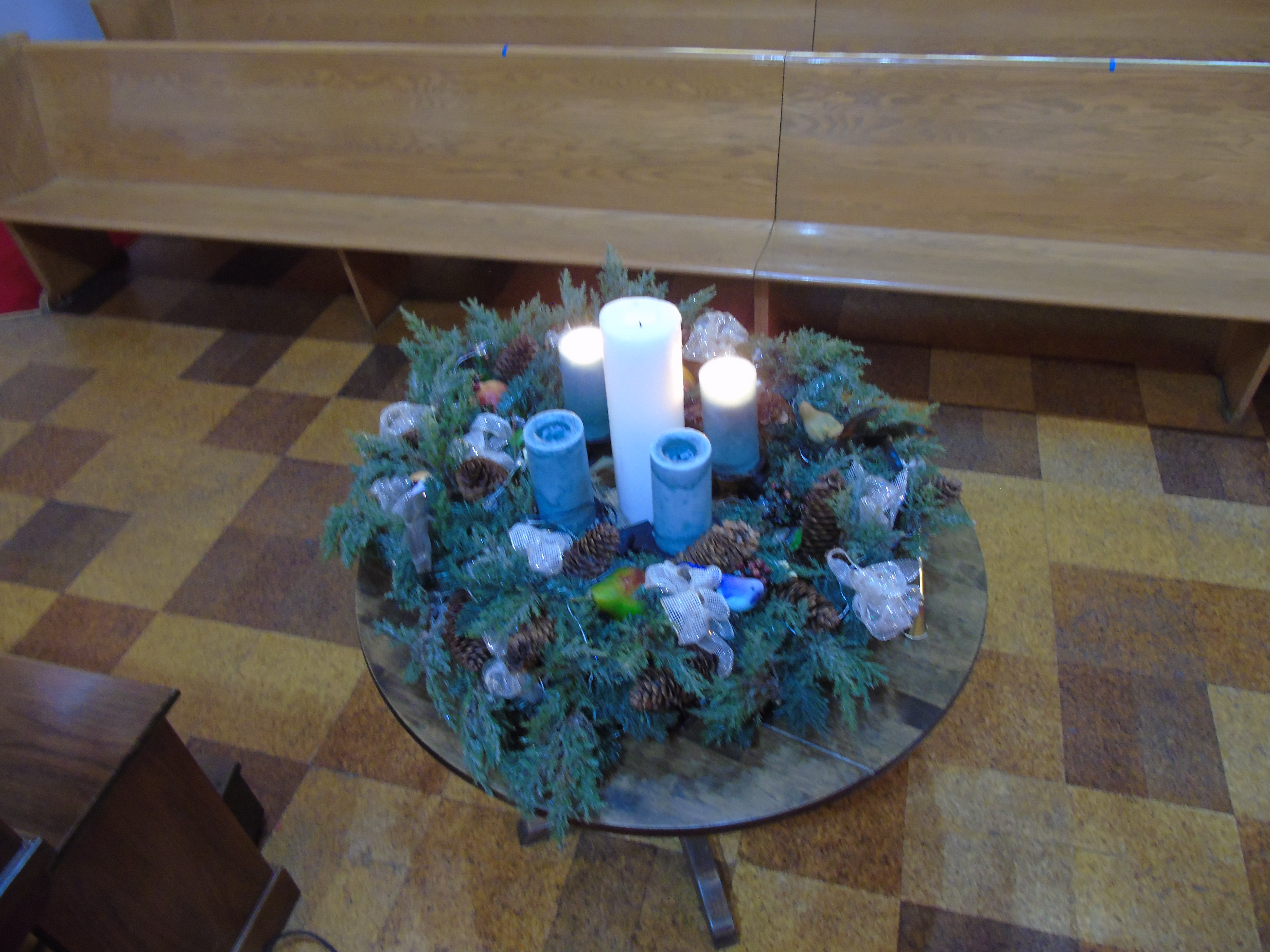
Looking Ahead to December 6, 2020 -- 2nd Sunday of Advent


 This being the first Sunday of December we will be celebrating communion.  Also remember that we are now live streaming our worship services on our YouTube channel.

The Scripture readings for this week are:

  • Isaiah 40:1-11
  • Isaiah 61:1-4, 8-11

The Sermon title is Building Peace

Early Thoughts: What is Peace? How is peace built? Personally and collectively what would it mean to live in peace, to (as the song encourages us) "Go now in peace, never be afraid"?

These two passages from Isaiah tell us a bit about that. These passages are written (and spoken) to people both in exile and returning from exile. They speak to a people whose parents and grandparents saw the world they knew torn apart and destroyed. That destruction leaves a scar on the soul that is not easily erased. That scar can make a whole people wonder if they will live in peace again.

Then God speaks through a prophet with words of comfort and promise. God tells them that they can get back home again, that they will find (or God will create) a path through the desolation of the wilderness.

Then later God announces that the time of restoration has come. The Jubilee Year, when all is to be set right, has arrived. In Luke's Gospel these words form the backing to the beginning of Jesus' public ministry. Jesus says that in his ministry the world is being set right again. That is how peace, real peace, is built.

The peace that we pray for, the peace that comes with God's Reign is much more complex than "peace and quiet" or "war and peace" or "a peaceful day at the lake" or "at peace with myself". It is all those things and more. The peace that comes with God's Reign is personal. It touches our troubled hearts and brings comfort, it speaks to our anxious minds and brings confidence. The peace that comes with God's Reign is also communal. It reaches into our unjust world and brings justice, restorative justice, it speaks to our divisive relationships and brings loving coexistence. This is the peace for which we pray.

God has long been at work nurturing and building that peace. It might be faster if God imposed it --- but is that really peaceful? God continues to nurture and build peace in our world.  God would prefer it if we joined in the project.

How are you building peace in the world today?
--Gord

Monday, November 23, 2020

Looking Ahead to November 29, 2020 -- First Sunday of Advent -- Hope


This week we are pleased to celebrate the sacrament of Baptism.

The Scripture passages for this week are:

  • Isaiah 64:1-9
  • Mark 13:24-37

The Sermon title is Resetting Hope

Early Thoughts: Where do we look for hope? How do we define Hope?

In these readings there does not seem to be a lot of hope. 21 years ago, when I was on internship, I was preaching on the first Sunday of Advent. When I phoned the Scripture reader for the week to tell her what the readings were her comment was "they better not be depressing". To be fair, this is not the most depressing part of Mark chapter 13, but still it is not the most hope-filled passage of Scripture.

And then there is Isaiah.  Read those opening verses...is that really our hope? Do we want to mountains to quake? Possibly, thought probably with a few caveats.

The hope of Advent, this time of preparation, is that God will break into the world and bring transformation.The hope this Advent is not that things will get back to "normal" before Christmas (hot tip -- they won't) it is that God will make God's self known and transform the world.

What gets in the way of you being hopeful this year?

I think we might need to stop and reset ourselves so we can see the hope in the world this year. Between 8 months of COVID-tide and the unceasing news coverage of the US Election and everything else that 2020 had given us hope might start to seem awfully far away.

But still there is hope. Still there is new life. 

A baby is, to me, always a sign of hope. A baby brings forth those hopes of what they will become. A baby makes us think about what sort of world we hope they will live in as they grow older.

What fills you with hope this year?

God is still present. God is still working in the world. God is still transforming the world -- even if not as quickly or visibly as we might wish. There is still hope.

And that is a good thing.
--Gord


Monday, November 16, 2020

Looking Ahead to November 22, 2020 -- Reign of Christ Sunday

 We have reached the end of the Liturgical Year. And still the Reign of Christ has not come in full glory. But we look for signs of it breaking into our lives as we transition from one year to the next.

The Scripture Reading this week is Matthew 25:31-46

The Sermon title is Which Did You Do?

Early Thoughts: How were and are you an agent of the Kingdom of God? Would you be a sheep or a goat?

It can be hard to tell sometimes. Sometimes you have to look closely, or so I have been told, to pick out the sheep from the goats when they are mingled together. Moving from the literal to the metaphor of the parable, sometimes we are sheep and sometimes we are goats.

WE live in a world where we are often told that the secret to passing the final test is to be a "good person". Some define that be the religion you follow, or the form of religion you follow. Some measure goodness by what you have accomplished in life. Jesus, it seems, measures it by how we supported and loved our neighbours.

When we are called to account for our lives, the parable suggests, we will not be asked about how often we prayed, or our understanding of various Christian doctrines, or even if we call ourselves Christian. We will be asked if we fed the hungry, or visited the lonely, or comforted the afflicted. No mention of worrying about "accepting Jesus as Saviour and Lord" as some Christian groups insist is mandatory for acceptance. No mention of having lived a sinless life, no mention of having been an unrepentant sinner either. No mention of anything other than how well we lived out the commandment to love our neighbour.

Makes for a pretty basic test doesn't it?  One single question. Mind you it is a pretty hard question when you get right down to it.

Christians declare that the Kingdom or Reign of God is both present and yet to come. We live in the Kingdom and we wait for it to break forth. On Reign of Christ Sunday we embrace that dichotomy. One definition of the church is that we are to be a testing ground for the kingdom. To me that means we are called to live as if we are citizens of a different type of place, a place where love is the rule and norm, a place where all our choices are made considering how they will impact our neighbours.

SO part of being a sheep (in a good way, not the way it is often used in current discourse) may well be to wear a mask and keep our distance and limit our outings as we collectively work to end the Covid-19 pandemic. Part of being a sheep is to be a good steward of the "stuff" in our lives. Part of being a sheep in a democratic society is advocating for a system that ensures all have basic needs met.

Are we sheep or goats? Being a sheep might come at a cost. Then again so might being a goat.

--Gord

Monday, November 9, 2020

Looking Ahead to November 15, 2020 -- Proper 28A, 24th Sunday after Pentecost

 The Scripture Readings this week are:

  • Amos 5:18-24
  • Matthew 25:14-30

The Sermon title is Use It Well!

Early Thoughts:When the Reign of God comes, there may be hard questions asked. How will we answer them? Judgement is apart of our story, part of the reality of life. We are accountable for the choices we make.

We don't like to talk about judgement very much. Or if we do it is to talk about how we think others should be judged. Some of us have heard the old lie that the God of Hebrew Scriptures is all about judgement and the God revealed in the Christian Scriptures is all about grace and mercy and forgiveness. Neither side of that statement is true. Throughout Scripture God is the one who judges and the one who is gracious, merciful, forgiving.

I love Amos. I also love to be reminded that if you like Amos you probably don't understand Amos. Amos does not pull any punches. Amos reminds folk that they have gotten things wrong. Amos reminds us that when the Day of the Lord comes, when God breaks into the world things can be uncomfortable. We will be held to account for the choices we have made. But Amos also reminds us of the ultimate goal, that time when justice flows like water.

Then we have our parable of the talents. To say it makes me uncomfortable is an understatement. What exactly is the point Jesus wants to make here? The whole "take from the poor and give to the rich" tone of the conclusion seems to go against the Law and the Prophets. At least if it is about the money.

Maybe it is about the choices. Maybe it isn't about the money. Maybe it is about taking risks for a larger goal. Maybe we are not called just to maintain what we have but take a risk to get something new. Maybe that is one of the criteria for judgement.

We have been given much. We have been entrusted with much. Do we use it well? Or do we misuse things so that our efforts become like (to borrow from Paul) a noisy gong or a clanging cymbal? Does our stewardship of the resources and talents with which we have been entrusted lead God to celebrate the move to justice or to despise our festivals and assemblies?

Judgement and accountability is part of our relationship with God. As we look toward the coming of the Reign of God we have to remember that.  Next week's conclusion to Matthew 25 will really make that clear.
--Gord

Tuesday, November 3, 2020

Live in Unity -- A Newspaper Column for November 13 (and maybe for the next congregational newsletter)


“How very good and pleasant it is when kindred live together in unity!”. Those are the opening words of Psalm 133. And wouldn’t it be good and pleasant if such a thing were true?

Right now it is not true. God’s kindred are not living in unity. It could be argued that we are more divided now than we have been for many decades. And I think we are getting worse. Maybe it is because of fear and anxiety, maybe because 6 months of distancing have made us too separated from our neighbours, maybe simple selfishness and tribalism are to blame. Whatever the reasons are I think we are getting less unified as time goes by.

I am writing this on the afternoon of November 3rd, Election Day in the US. If there is one sign how far we are from God’s kindred living in unity this election cycle is it. Because it is only mid-afternoon I do not yet know what the results of the vote will be. In fact we may not totally know the full results by the time these words have appeared in the paper. But my heart forebodes that whatever the results of the voting (and the protests and challenges that may accompany those results) an increase of living in unity is not likely going to be an end result. We need the world to change, we need our hearts to change, to get that result. That change will never come in a ballot box. It comes when we let God transform us and the world.

Also on my mind as I write this column is the fact that we are in the week where we are asked to pause for 2 minutes at 11:00 on the 11th day to remember the brutal, horrific, dehumanizing cost of warfare. There are a lot of prayers we could call to mind in that time of silence. One of mine is to pray for the day when warfare is no more because God’s kindred are living together in unity? For me that is a key part of Remembrance Day, and a key part of the life of faith. We remember the failings of the near and distant path but look to the future. We recognize that in the past and in the present we have failed to live into the ideals of God’s Kingdom as shared by Jesus of Nazareth and the many prophets of the Old Testament. We have failed to live lives fully loving our neighbour, friend, and enemy. But we do not simply accept those failings as they way things must be. We can, we should, we must commit to do and be better.

This commitment to do and be better might take the form of sharing the words “Never Again” as part of our Remembrance Day commemorations. It might be by reaffirming support for the goals of Pride or Black Lives Matter or Idle No More. It might mean we ask serious questions about how money and other resources are distributed in the world. It certainly means we open ourselves to the God who is transforming the world in our midst.

I believe 2020 can teach us about new priorities. I believe if we take that lesson seriously we can in fact move away from division and towards that day when ALL God’s children live together in unity. The pandemic, the economic crisis, the racial strife can teach us what it means to care for each other and build up a world of justice and peace and hope and love. We just need to be open for the end of many things as we know them in the act of building a new way of being.

How good and pleasant it would be if love and justice and peace and equality were truly the guideposts that shaped our every decision and action as individuals and as communities. How good and pleasant it would be if we all lived together in unity. In the end we are all kindred. Our prayer for living in unity is not just about those who we recognize as family, or those who are like us. Jesus calls us to love our neighbours, and Jesus is clear that this includes the outsiders, the different ones, even our enemies. Only when we do that will the worlds of Psalm 133 come to full truth.

God is at work in the world. God is at work building the Kingdom of God in our midst. God is changing the world. God is inviting us to be transformed. Will we open ourselves to that transformation? Will we welcome all God’s children to live in unity with us? How good and pleasant it will be when God’s kindred are together.

Monday, November 2, 2020

Looking Ahead to November 8, 2020 -- Proper 27A, 23rd After Pentecost

 The Scripture Readings this week are:

  • 1 Thessalonians 5:1-11
  • Matthew 25:1-13

The Sermon title is Ready?

Early Thoughts: Like a thief in the night. Out of left field. A bolt out of the blue. Maybe like a jack-in-the-box. Transformation comes to us as a surprise. The Kingdom of God, the transformation of the world, comes to us as a surprise.

These last few week of the Liturgical Year lead us to consider the transformation of the world, the coming of the Reign of God, the end of the world as we know it (and I feel fine?). Then when the New Year begins on Advent 1 (November 29th this year) we continue to look for the transformation of the world, the coming of the King, the change that we pray for every week with the words "Thy kingdom come, they will be done..."

Talking about the end of the world in the same week as a Presidential election seems.....odd? ominous? foolish?

Talking about changes that transform our lives whether we are ready or not, whether we like them or not in the midst of a global, once in a century, pandemic seems... timely? overkill? foolish?

Fact is, many things in life come as a surprise. Maybe some of them shouldn't, but they do. After watching the news from Wuhan throughout January and February, and with the memory of the SARS epidemic of 2003 available to us, maybe we should have been more prepared for March. But it still surprised many (perhaps most) of us that we had to change so much so fast. It still surprise, frustrates, and vexes many that those changes are still making such an impact on our day-to-day life.

I think it is safe to say that we were not ready.

The passages this week tell us to be ready. Be ready because nobody knows the day or the time. We may know it is about to come but the exact time is a secret. It might be sooner than we expect. It might be later than we expect. So be ready.

Are we ready for the world to be transformed? Are we ready for the end of what we have known? What will happen if we are not ready?

--Gord

Tuesday, October 27, 2020

Looking Ahead to November 1, 2020 -- All Saints' Day

 This being the first Sunday of November we will be celebrating the sacrament of Communion.

The Scripture Readings this week are

  • Revelation 7:9-17
  • 1 John 3:1-3

The Sermon title is For All the Saints

Early Thoughts: We are surrounded, so the book of Hebrews tells us, by a great cloud of witnesses (Hebrews 12:1). That Cloud is made up of all those who have gone before us, and so it is fitting to remember them this weekend on All Saint's Day.

On this day we pause to give thanks for those who have gone before us and passed the faith down to us. On this day we pause to remember those who have been key parts of our lives. On this day we remind ourselves that they are still with us in some way.

AS the article linked above notes, this celebration has moved around over the centuries. But it has long been associated with this time of year. In fact the name Halloween is a corruption of "All Hallows Eve", the day before All Saint's Day. ANd I think it is appropriate that it falls at this time of year. This week is the old Celtic festival of Samhain, a festival that lies beneath many of our Halloween traditions. At Samhain it was believed that the veil between the world of the living and the other world was especially thin. That could be a time to worry about ghosts and ghouls. It could also be a time to be thanksful for those who have gone before us.

Who has gone before you that you want to remember this year? Who are the saints that have brightened your life's journey thus far?

--Gord

Monday, October 12, 2020

Looking Ahead to October 18, 2020 -- 20th Sunday After Pentecost

 This Sunday we will be celebrating the sacrament of Baptism.


The Scripture readings for this week are:

  • Isaiah 43:1-7, 16-19
  • Isaiah 45:1-8

The Sermon title is Called By Name

Early Thoughts:  There is a power in being called by name. There is a power in giving a name. Naming matters.

In Baptism we recognize that this person is a Beloved Child of God. In Baptism we recognize that something special is present in our midst. We acknowledge that God has claimed this child as God's own and that God has promised to be with this child even through fire or flood -- or what ever else the world may have to throw at them.

I think we all have days when we need to be reminded of those things. Are there days you forget, even for a moment, that you are a Beloved Child of God? Are there days when you wonder if God is actually there walking with you through fire or flood (or pandemic or economic crisis or...)?

AS people of faith we are called to be people of hope. We are challenged to have hope that the crisis in which we find ourselves one day is not the end of the story. We are encouraged to remember that God has the last say and, in the words of Julian of Norwich, "all manner of thing be well" -- someday at least.

Isaiah is speaking to people in exile, telling them that they will soon be allowed to go home. Isaiah is reminding people that even though they have been dragged from their homes (well for many of them their parents were dragged away from home), dragged away from the place where the house of God stood (and in fact the Temple has been destroyed), God is with them. Isaiah is telling the people that God is at work amongst them, that something new is about to happen.

Where is God these days? What new thing is God doing in our midst today?

God has called each one of us by name. God speaks to and loves each of us as individuals. God has laid claim to us, we are not left alone, we are not forgotten, we are held in God's hand. This is Good News!

How does knowing that we are named and claimed by God change how we will live our lives?
--Gord

Monday, October 5, 2020

Looking Ahead to October 11, 2020 -- Thanksgiving Sunday


Our 2017 Thanksgiving Display 
The Scripture Readings this week are:
  • Deuteronomy 8:7-18
  • 2 Corinthians 9:6-15
    2013


The Sermon title is Remember! Be Thankful! Be Generous! 


Early Thoughts:
What is Thanksgiving Day for? A big meal? A long weekend? In NW Ontario the 2nd Saturday of October marked the beginning of moose season so a three day hunting excursion was on some minds. Or maybe is it a time to stop and reflect on life. Maybe that reflection will lead us to gratitude. Maybe that gratitude will lead us to be more generous.

The Revised Common Lectionary is a 3 year cycle. In 2 of those three years the suggested reading from the Jewish Scriptures comes from Deuteronomy. And both of those passages are a recapping of what God has done for God's people. Apparently remembering is a key part of being thankful. Apparently reminding ourselves of gifts given is a key part of being thankful for those gifts. And thinking about it, that makes a whole lot of sense. So the first step in our Thanks-giving is to Remember.

2012

The next step, logically enough, is to Be Thankful. Once we have recognized what gifts we have in our lives we have to choose to be thankful for them. We could choose to see them as entitlements rather than gifts. We could choose to say these are things that are owed to us, or things that are our right to have. But maybe that is both unrealistic and unhelpful. If we see our lives as gifts. If we see those things that make our life full and abundant as gifts then I believe we will be happier, we will be more grateful (which in and of itself changes how we view the world), we will be less likely to lament our perceived lack or scarcity, we will see the abundance that is a part of our lives. And then we will be able to give thanks.

Some people might say that the cycle ends there.  we remember, we recognize our gifts, and we give thanks. I disagree. As I consider the words and teachings of Scripture, as I consider everything I have learned about the life of faith I think there is a next step. As Children of God we are blessed, we are given gifts, we are called to be thankful people. As Children of God we are called to respond to God's gifts. We are called and challenged to Be Generous. This, I think, is the natural culmination of our Thanksgiving cycle. When we see the world as a place filled with gifts and abundance, when our hearts are thanks-filled, when we are singing praises to God for what God has done, how can we help but be generous with the world around us? And so we share with the world those things that we have been given. It is my belief that when we do that we actually have a better life. Gratitude and generosity change how we see and experience the world.

And all that is great. It is a message that could (and has) been preached on many a Thanksgiving Sunday. But this year feels different. This year there are many voices out there pointing out the list of things not to be thankful for. This year there may be more people than usual questioning what we have to be thankful for. Then again, there are some of those voices every year.

So what do you pause to remember this year? What gifts have you been given this year? Why do you say thank-you to God in the midst of the chaos that has been 2020? How are you, how can you continue to be, generous?

Blessed Thanksgiving my friends.
--Gord

Monday, September 28, 2020

Looking Ahead to October 4, 2020- Proper 22A, Worldwide Communion Sunday

This week being the first Sunday of the month we will be celebrating the sacrament of Communion. Because it is the first Sunday of October it is also Worldwide Communion Sunday, a day to remind ourselves that we share in a global faith community.

The Scripture Readings this week are:

  • Exodus 20:1-18
  • Psalm 19:7-14

Hanging in the Friendship Room
 The Sermon title is Good Boundaries Keep Us Healthy!

Early Thoughts: Who likes rules? Often it appears that people only like rules when it suits them, when the rules don't get in the way of what they want to do.

But rules are vital for a healthy community. Imagine if everyone just did what they wanted when they wanted. Imagine if everyone only did what was best for them. Would that be a healthy place to live? Would it be a safe place to live?

I suggest that the answer is no.

Rules help us remember that it is not all about us. It is about US. Life in community is not about ensuring "that I get mine first", it is about ensuring that we all get what we need. Yes rules are a limitation on our activity but that is for the good of all of us.  Sometimes the rules save us from other people. Sometimes the rules protect others from us. Sometimes the rules protect us from ourselves.

As the people are heading through the wilderness to the Promised Land God is shaping them into a new people, a new nation. As a part of that process God gives rules, boundaries, laws that will guide how they live with God and with each other. The 10 Commandments are a part of this set of boundaries, rules, and laws.

Jewish tradition sees the Law as a gift from God. The Psalm this week talks about it as being "More to be desired are they than gold, even much fine gold; sweeter also than honey, and drippings of the honeycomb.". Can we view the rules and boundaries in our lives as gifts?

Now let us be honest. Some rules are bad. Some boundaries serve to protect things that should be dismantled. Some laws need to be changed. So we also need to discern which rules are helpful and which are not, which are gifts and which are tools for controlling us.

But in the end Good Boundaries make for Good Communities. And that is the end goal.  Isn't it????
--Gord